
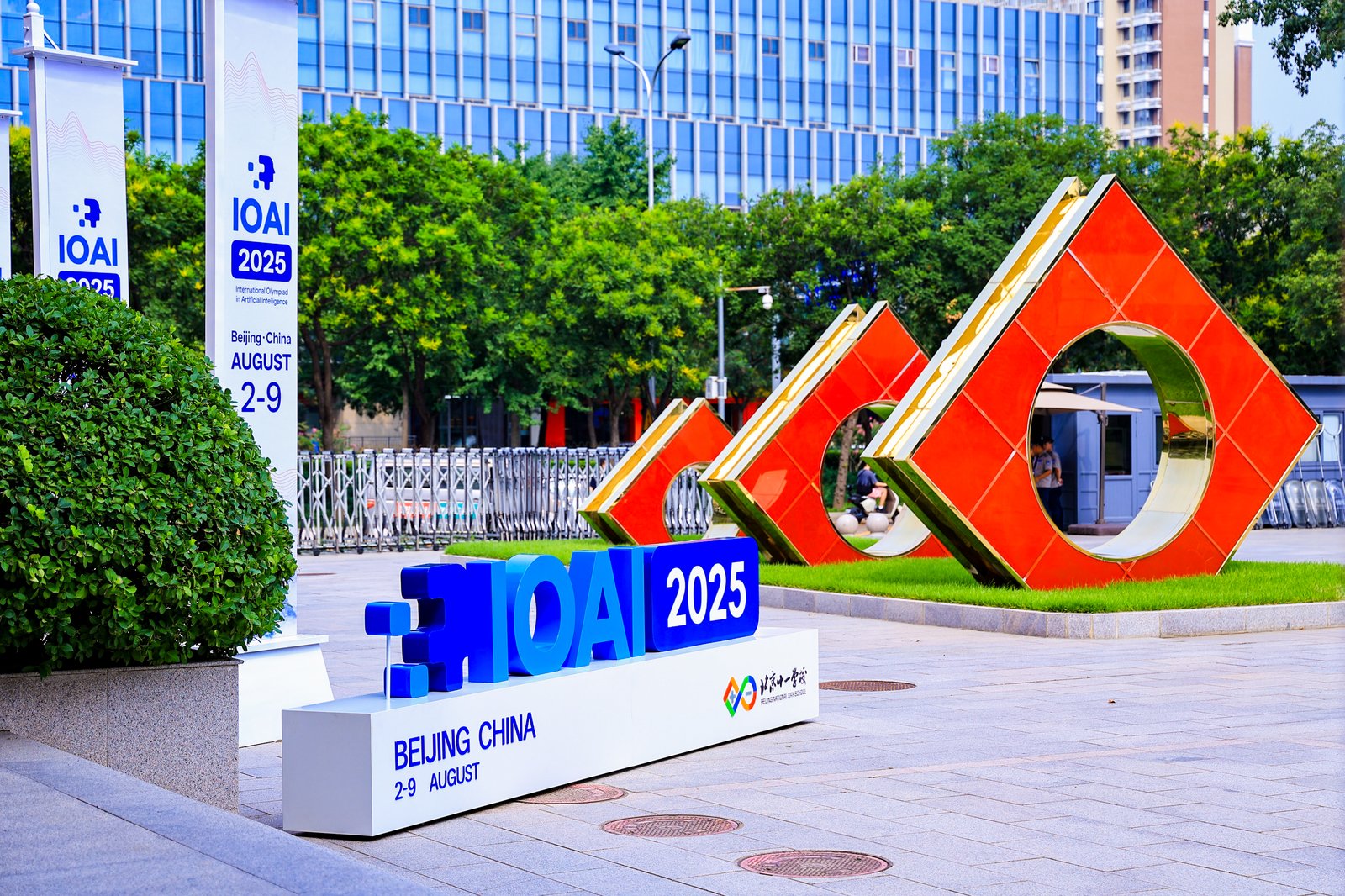
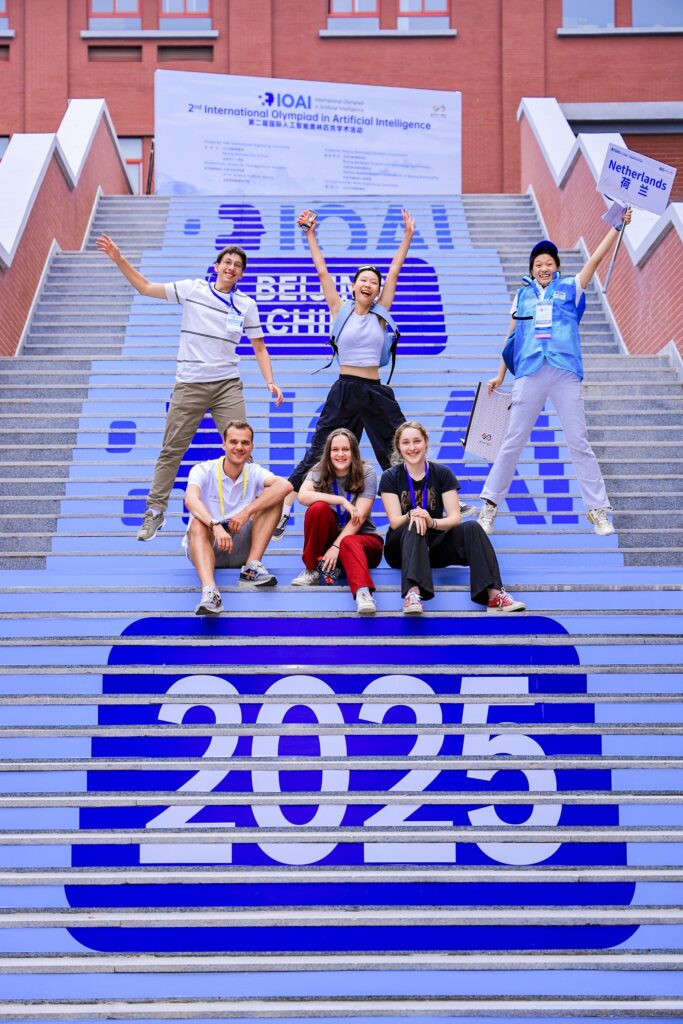
“Our trip to Beijing revolved around the International Olympiad in Artificial Intelligence, or IOAI for short, where I was the team leader of the Dutch delegation. This relatively new Olympiad (2nd edition) stand alongside the better-known Olympiads such as the International Mathematical Olympiad (IMO) and the International Olympiad in Informatics (IOI). During this IOAI, more than 60 countries were represented. The Dutch team, with me at the helm, consisted of four high school students: Rosalie (15), Matthijs (16), Stefano (17), and Lieke (18). They had been selected through the IOI.
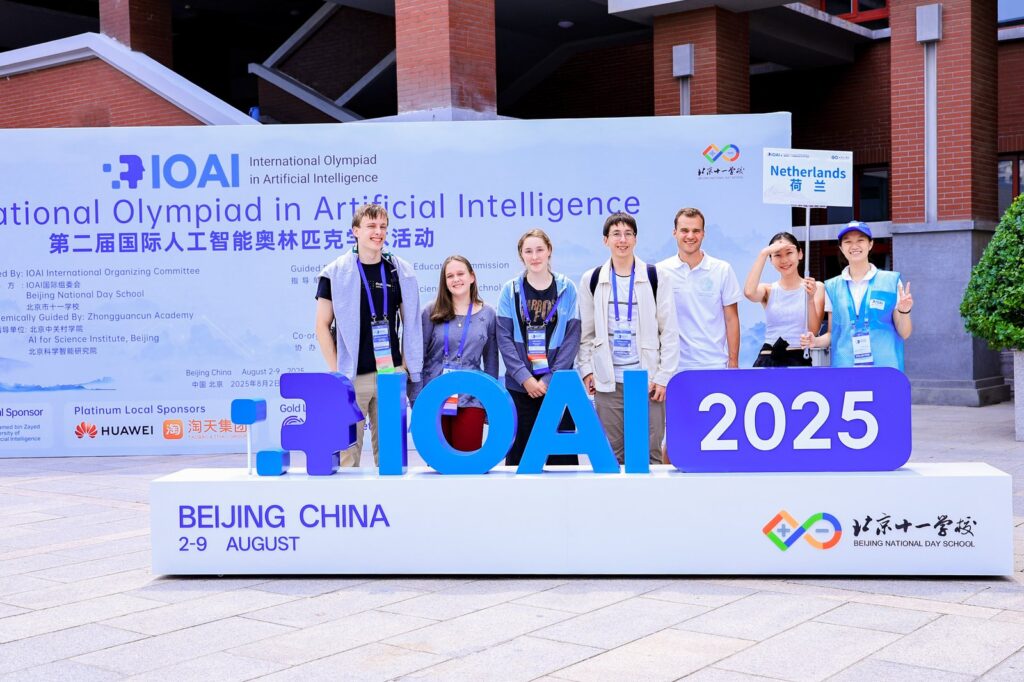
This Olympiad is still relatively in its early stages, at least in terms of editions, which is why Tilburg University was asked to give a training day and sent along a team leader. The university then turned to the AI “experts” within the university, Tilburg.ai, for a team leader. This was where I had the honor of accompanying and guiding these “whizz kids”.
The Olympiad itself would consist of a team challenge and an individual contest. The individual contest consisted of various assignments related to AI. Because this is quite a broad concept, I will try to illustrate one example assignment. Language models such as ChatGPT have a specific vocabulary, acquired through training data. Images, however, can also represent concepts, such as the emoji ???? denoting “fire.” When multiple images are combined, they can convey a broader, composite concept. For example: ????♂️ – ⚔️ – ???? – ???? represented a person fighting fire, in other words, a firefighter. But if the first image was changed to a house: ????– ⚔️ – ???? – ????♂️, then, of course, the answer would be a… fire station. In other words, the first image specified the target object to be identified. The task for the participants is to train a model that processed the four images, detect the referential role of the first image, and then generated the correct word. And, as you might expect, this is easier said than done.
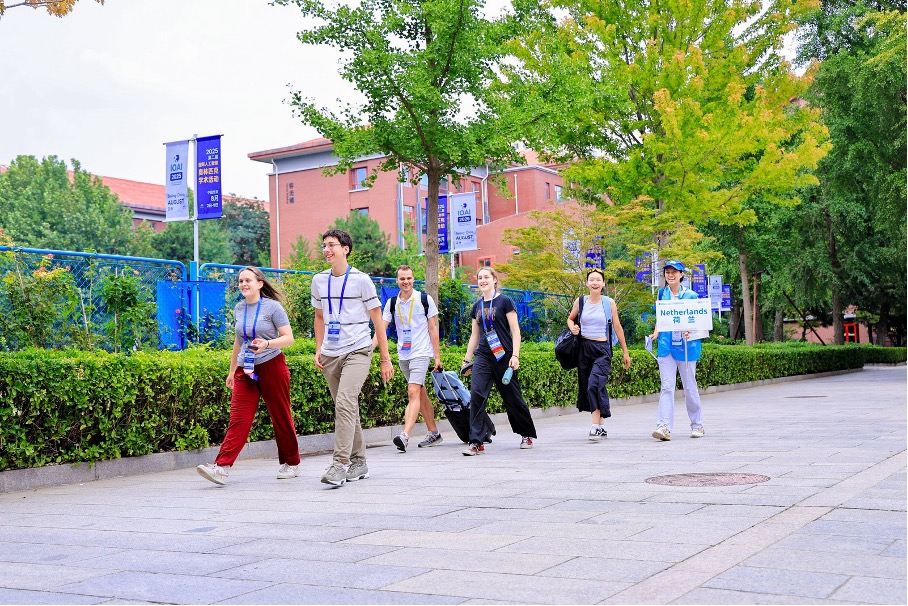
Day 1: Once we arrived in Beijing, we quickly noticed that the organization ran like a well-oiled machine. Everything that day had been arranged down to the smallest detail to give us a warm welcome. The IOAI took place on a huge secondary school campus, completely decorated for the event. This immediately made it clear that it was a prestigious school, as the price per square meter in this area was among the highest in all of China. A large number of students had been enlisted to act as guides for each country, in fact, there were more volunteers than participants.
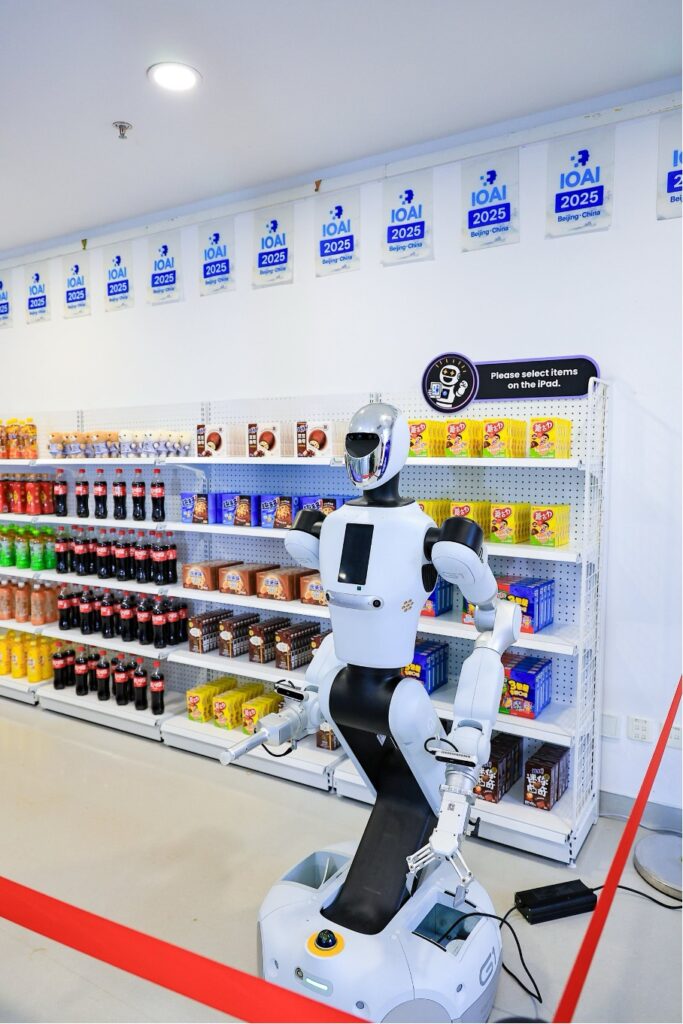
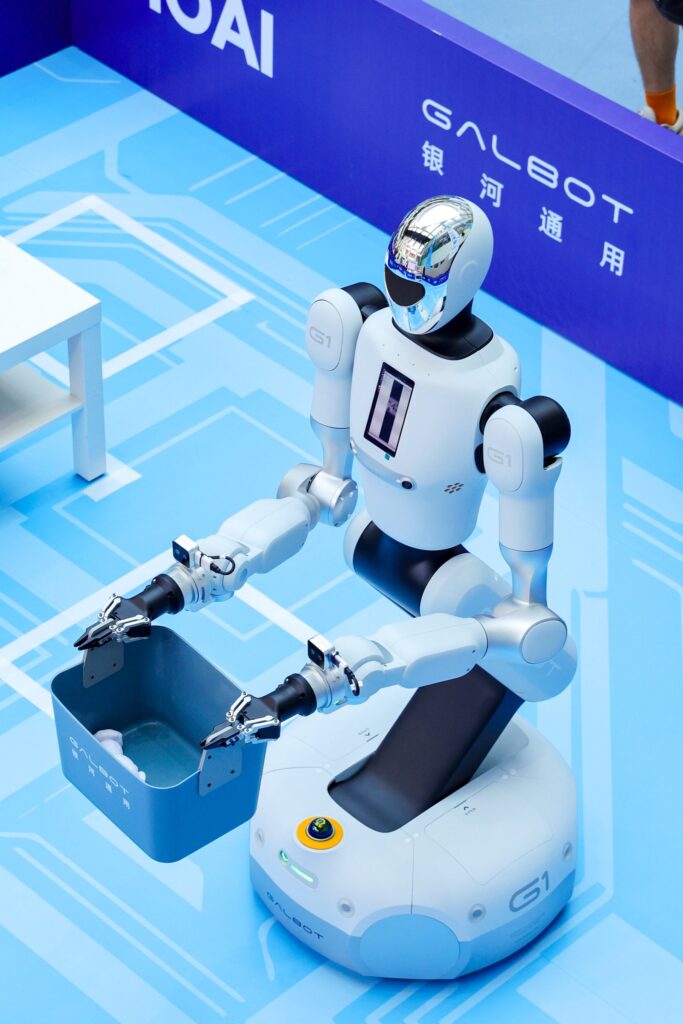
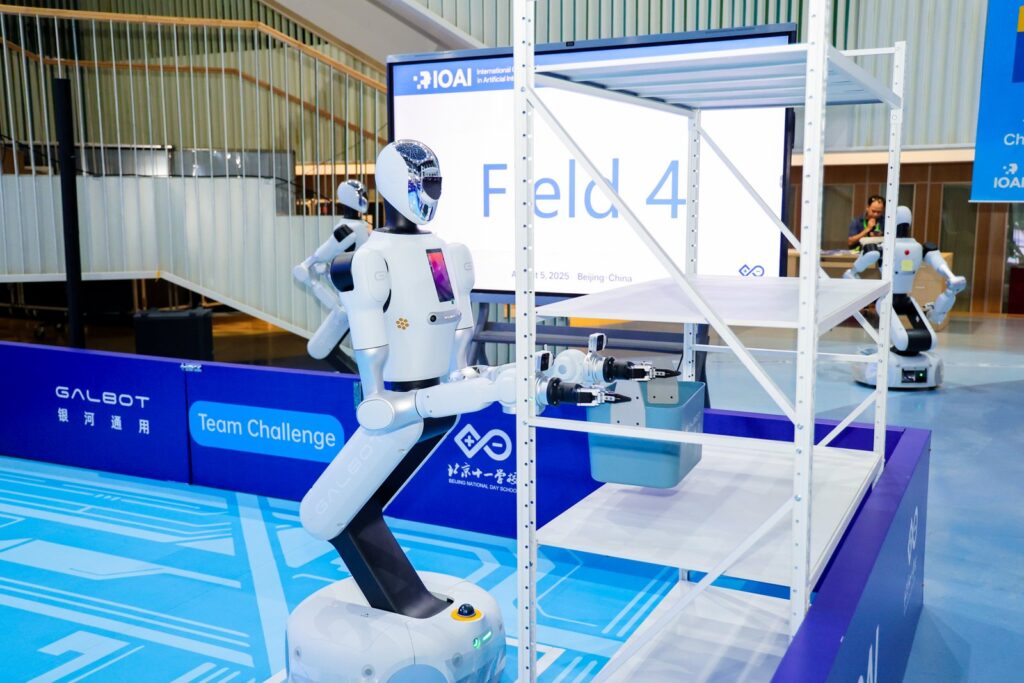
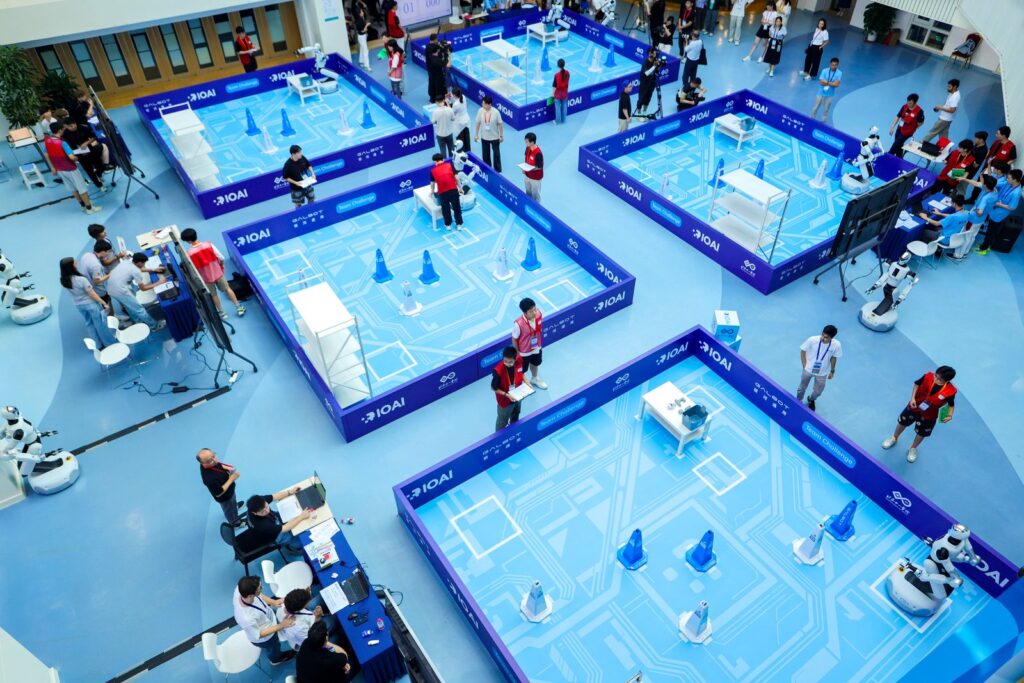
For us, our volunteer was Fandy, an 18-year-old girl, though I could just as easily have guessed she was 14. She spoke perfect English and had the energy of ten people! After being showered with a bag full of items (T-shirts, an umbrella, etc.), we explored the campus. We were accompanied by another team, not a competing team, but a team of photographers. The robot for the team challenge was also already in place. It had been pre-programmed to take your order, pick the correct bottle or snack from the shelf, and hand it to you afterwards, super cool!
Day 2: The next day, a visit to Peking University and a tour of the Innovation Center were on the schedule. Peking University was one of the two major universities in China, and this was evident from the sheer size of the campus, Tilburg seemed rather small in comparison. After our visit to the university, we continued on to the Innovation Center. Unfortunately, apart from the pictures, I could not say much about it, as all the information was in Chinese. Once back on campus, we had the opening dinner, where we were treated to various traditional performances. After that, I attended my first official meeting of the General Assembly. I represented the Netherlands and voted on the adoption of the regulations, contest rules, and so on. I was also kept informed about the technical briefing and what had happened during the contest itself.
Day 3: The competition activities began on our third day. This day included the official opening of the IOAI, team challenge as well as the practice contest. This meant that the well-oiled machine could start running again: breakfast at 6:30, on the bus to the venue at 7:00, and the start at 8:30. Despite everything being done the Chinese way, meaning it had to be perfect, the well-oiled machine faltered briefly. France had forgotten its flag for the opening ceremony and was given one by the organizers. You can probably guess what happened: they received the most beautiful flag of them all: the Dutch one.
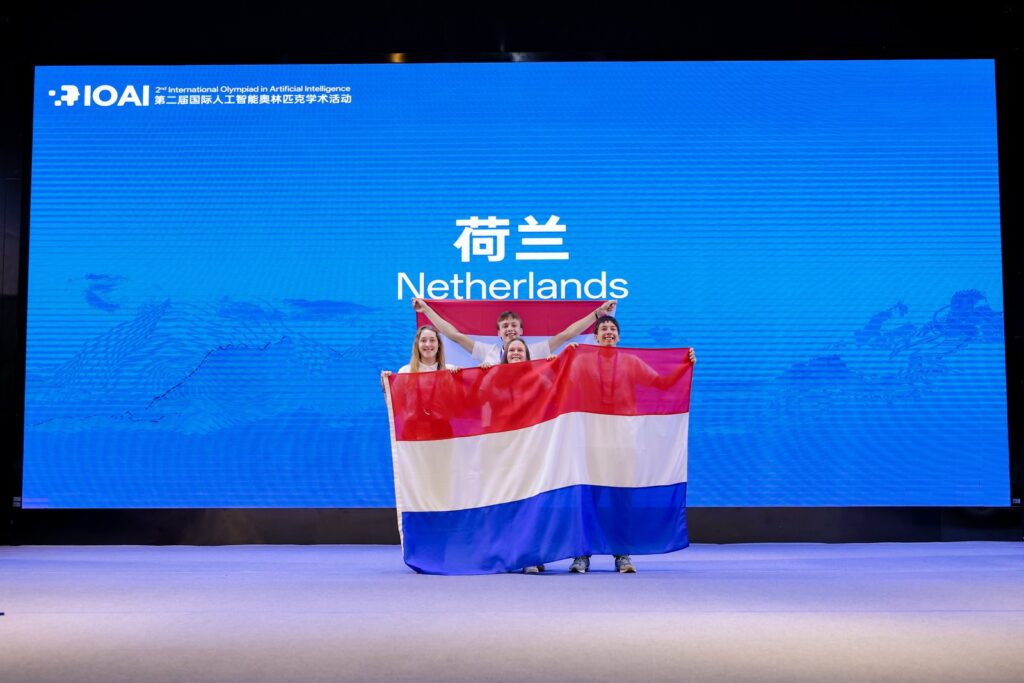
After the opening is was time for the team challenge, in which the participants had to program the previously mentioned robot. Instead of picking up your bottle of cola, the participants now had to program the robot to pick up various objects, place them in a container, and then put that container into a cabinet. After the team challenge, I attended the second official meeting. I found it very interesting to be present and to cast my vote.
During the General Assembly, the practice contest took place for the participants. In this, they could work on a sample problem to become familiar with the physical environment, their own desk for the contest, as well as the digital environment and how the setup worked there. Once back at my hotel, the team leaders’ group chat exploded, as many competitors had experienced technical problems. Understandable, considering the kind of computing power required to submit AI-models and then have them all run simultaneously on the test models.
In other words, I lay in bed stressed, checking all the information from the organizers for my contestants and filtering them back to them. However, they were sleeping peacefully (luckily, they had not encountered any technical issues). I would also like to note that the organizers worked tirelessly day and night on the platform, and while not every issue could be eliminated, they ensured there were effective solutions in place. Chapeau!
Day 4: The first day of the IOAI Individual Contest. Although the participants only started at 10:00 a.m., I was up early, at 5:00 a.m., to translate the contest problems into Dutch. This also marked the start of the official IOAI-procedure. The team leaders were placed in a kind of quarantine to ensure that no information could possibly leak to the outside world. After some deliberation over the correct translation of the terminology, the time passed quickly, and the Dutch participants began their Olympiad!
This first day of the Olympiad turned into an eight-hour marathon for the participants. Due to the technical problems many competitors had experienced the previous evening during the practice contest, an extra hour was added today to ensure everything worked properly. Even during the contest, there were still technical issues, which led to yet another hour being added. The only information available about the participants’ progress was a live leaderboard that was updated every half hour, very nerve-racking!
After the contest, there were mixed expressions to be seen on the faces of the contestants, but fortunately, smiling faces soon returned. For me, it was important to hear from all four participants about any technical problems they had encountered so that I could record them and bring them to the official meeting of Day 1, which took place that evening. This third official General Assembly ended up taking up the rest of the night. We received debriefings of the day, updates for the participants, and elected new members to the board.
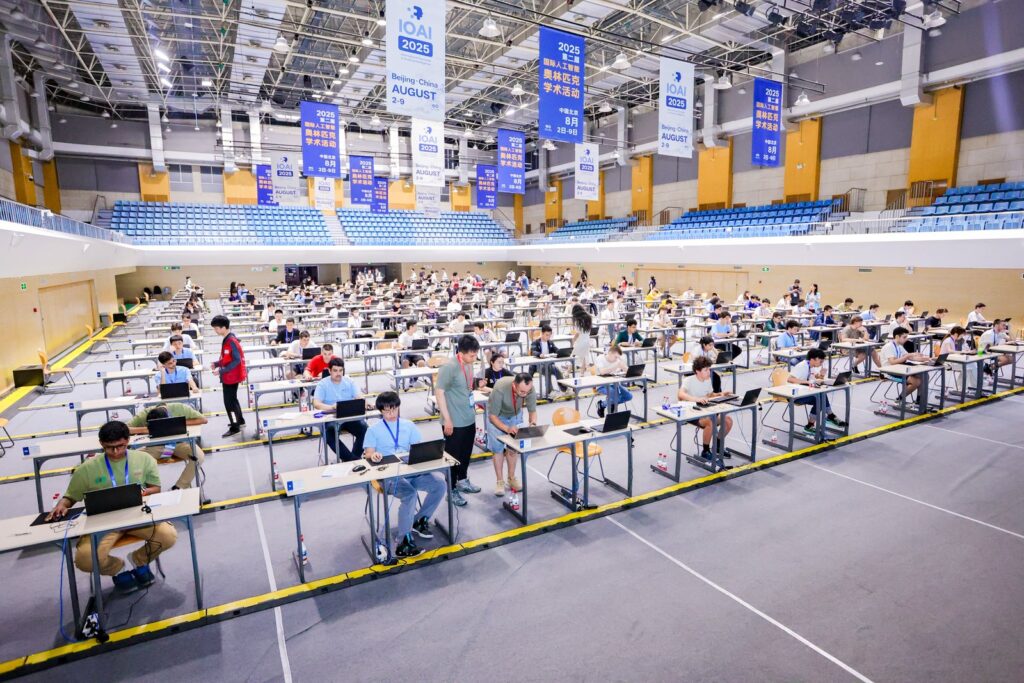
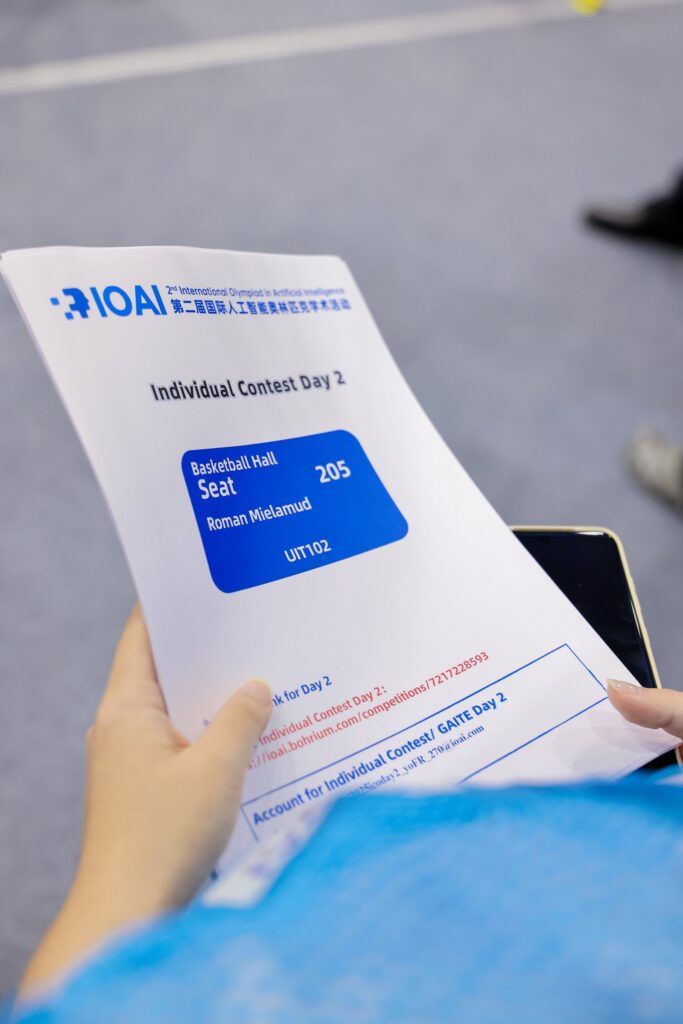
Day 5: Day two of the individual contest began, just like yesterday, with translating the English version into Dutch. This went very smoothly, and before I knew it, I was already done or rather, sitting in a room with the other team leaders in quarantine until the participants were present in the contest hall. Once the participants were inside, a free afternoon began for me, as I had the entire contest off! While the kids worked hard on differentiating between fake and real paintings and matching female restroom icons to the male ones from the same toilet building, I wandered around in a sweltering 40°C on the grounds of the Summer Palace.
Fortunately, after the contest, four cheerful faces emerged, and the smiles stayed all evening during the official party. Although the organizers could have made it easy for themselves by simply holding it on campus, they had gone all out. They had rented a park 30 minutes away and built a huge stage. The participants loved it, and I was especially happy with the cold water! After the participants were dropped off by the convoy of 15 buses, we team leaders were taken back to the hotel. On the way, we were told that we would receive the official results of Day 1. I was allowed to open the official envelope, review the scores, and share them with my participants. Fortunately, I had good news for them, they had performed better than they themselves had expected. At that moment, I had only received the scores per question, and we still had no idea how this compared to other countries.
Day 6: To ease the tension, the highlight of the cultural attractions was on the schedule for the next day: the Great Wall of China! Impressive, but also a physical challenge. The enormous number of steps, either far too short (due to the smaller people of the past) or ridiculously high (sometimes up to 80 cm!) proved quite a test in the heat. Fortunately, I could cool down on the bus ride back to the Beijing National Day School, where the technical briefing for Day 2 and the moderation session were on the program.
The same morning, and after our visit to the great wall, I collected the participants’ scores for Day 2, along with the updated scores for Day 1. And just like the day before, I have to say: they each impressed me greatly (though of course, they had already done so even before I saw the scores). We had a chance at a bronze medal! The next day, during the closing ceremony, we would finally be put out of our suspense.
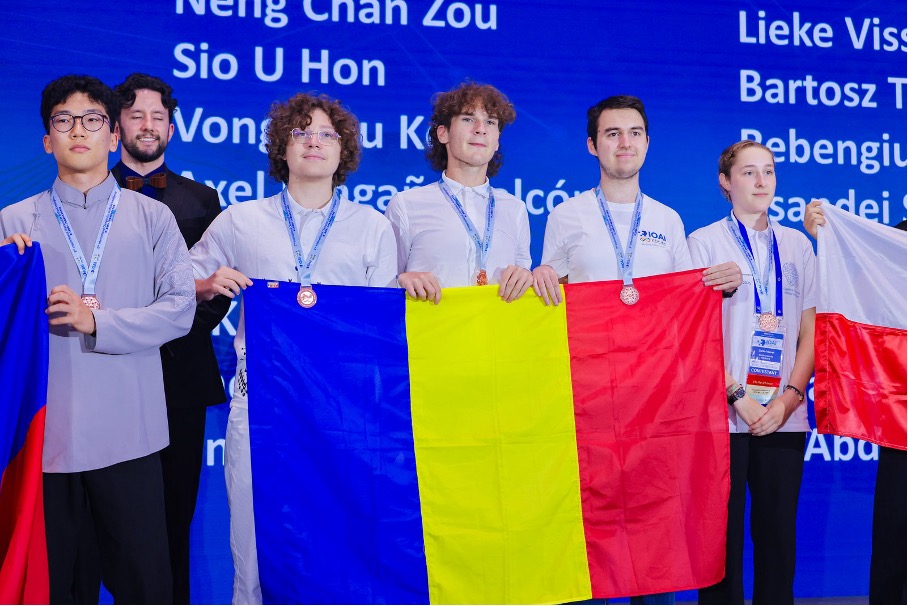
Day 7: Participating in an Olympiad is, of course, more important than winning. Still, it is wonderful to be able to say that Lieke would be going home with a bronze medal. She was also one of the handful of women taking home a medal. In fact, there were very few female participants overall: 25 out of the 283. The closing ceremony took place at an external venue this time, once again fully decorated for the occasion. In the meantime, I had checked in with a few other team leaders about their scores, and it looked like Lieke was in a strong position. And indeed, as I already mentioned, she did win a bronze medal. The medal system worked a bit differently than you are probably used to: the top 50% of participants received a medal, with the top 50–25% earning bronze, the top 25–12.5% earning silver, and the top 12.5% earning gold. First place went to Poland, while second and third went to Singapore.
In short, being a team leader at the IOAI was a once-in-a-lifetime experience. For an entire week, cultures met, ideas for a universal training approach to the Olympiad were exchanged, and everyone worked together to help shape and improve the olympiad for future editions. It was inspiring, humbling, and absolutely unforgettable. I am incredibly proud of all the participants, both our Dutch team and competitors from around the world. Taking part in an Olympiad is an achievement worth celebrating!”